The News
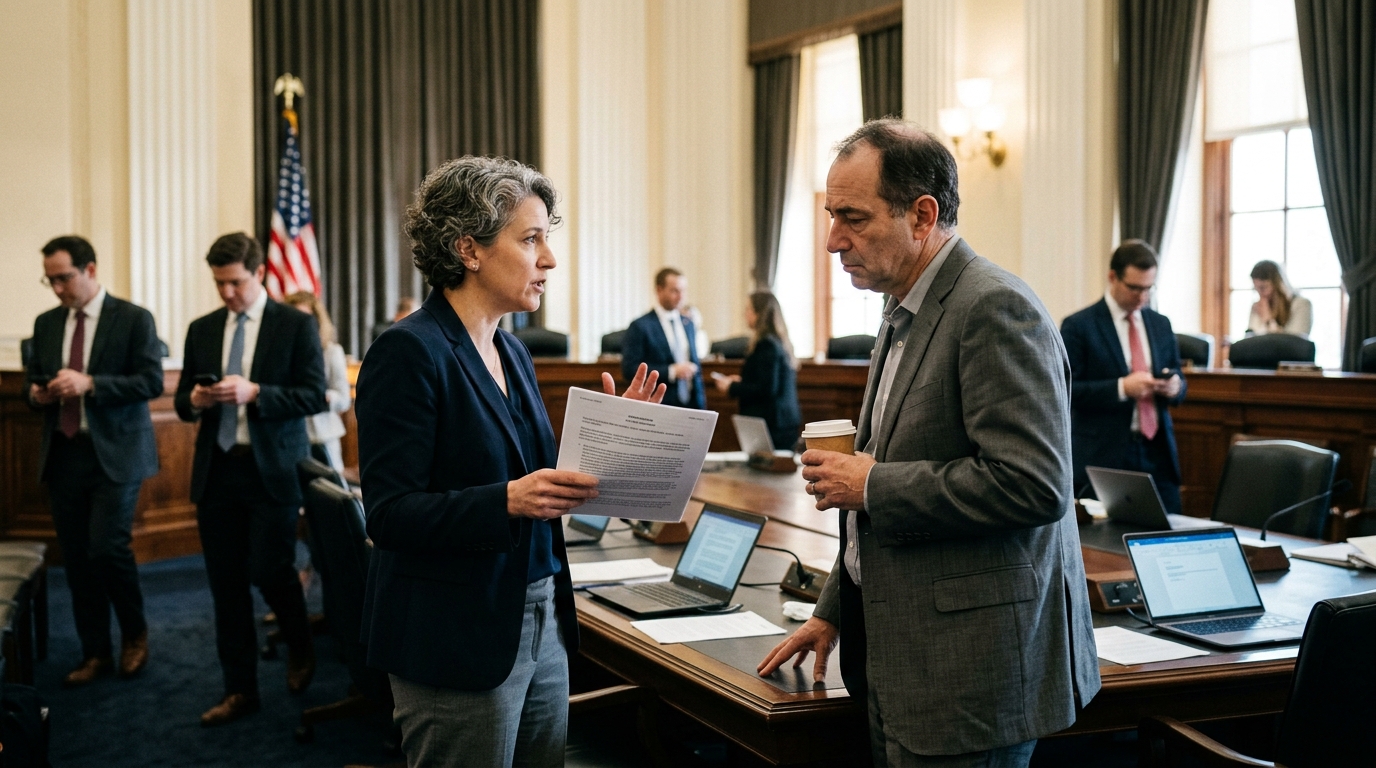
Former President Donald Trump recently postponed an executive order aimed at providing comprehensive oversight for Artificial Intelligence development in the United States. This order was initially scheduled to be signed at a high-profile ceremony, with many prominent AI company CEOs in attendance. The primary reason cited for this delay was a strategic imperative: to ensure the US maintains a competitive edge against nations like China in the rapidly accelerating global AI race. This move signals a potential prioritization of rapid innovation over immediate, stringent regulatory frameworks.
This delay comes amid a broader international debate on how best to govern AI. For instance, Peter Wennink, the CEO of ASML, a critical supplier of chipmaking equipment essential for AI, has publicly advocated for the European Union to ease its own AI regulations. Wennink argues that doing so is essential for Europe to keep pace with the US and Asian countries in AI development, highlighting the intense global competition for leadership in this transformative technology. This stance from a key player in the AI supply chain underscores the pressure many nations feel to balance innovation with oversight.
Many tech industry leaders in the US have consistently expressed a preference for voluntary collaboration and industry-led standards rather than mandatory government regulations. They argue that overly strict rules could stifle innovation and put American companies at a disadvantage. This postponement aligns with that sentiment, indicating a period where US AI companies might operate with fewer immediate governmental restrictions, potentially accelerating their development cycles and product launches without the immediate burden of new compliance requirements.
Why It Matters to You
This shift in regulatory focus has significant implications for everyone, from business owners to employees and even students. A less regulated environment, even temporarily, could accelerate the deployment of AI tools across industries at an unprecedented pace. For business owners, this means more immediate opportunities to integrate AI into operations, potentially boosting efficiency, automating tasks, and creating entirely new services. However, it also means increased pressure to adapt quickly, as competitors might rapidly adopt AI solutions, leading to a faster pace of technological change within workplaces, requiring businesses to invest more in AI literacy and infrastructure.
For employees and students, the delay in US AI regulation means the pace of job transformation could intensify. While AI is expected to create new roles, it will also automate existing tasks, requiring workers to upskill or reskill rapidly to remain relevant. The global AI race, now potentially less encumbered by immediate US regulations, could see an even faster push for AI breakthroughs. This could lead to an influx of advanced AI applications in daily life and work, from sophisticated AI assistants like ChatGPT or Google Gemini to automated decision-making systems, making AI literacy a critical skill for future career success.
The lack of immediate, comprehensive regulation also raises questions about ethical AI deployment. For example, Standard Chartered CEO Bill Winters’ comments regarding AI’s role in potential job cuts have already drawn scrutiny from regulators, highlighting the real-world impact of AI on employment. Without clear governmental guidelines, companies might face fewer immediate checks on issues like algorithmic bias, data privacy, or the transparent communication of AI’s societal effects. This places a greater onus on individual companies and users to navigate the ethical landscape of AI, impacting trust and public perception.
Guru’s Education
The core concept behind AI regulation is not about controlling the technology itself, but about governing its *impact* on society. Think of it like regulating pharmaceuticals: the government doesn’t tell scientists how to invent new drugs, but it sets strict rules for testing, safety, and marketing to protect public health. Similarly, AI regulation aims to establish guardrails for data privacy, algorithmic fairness, transparency in decision-making, and overall safety as AI systems become more powerful and pervasive in our lives.
When we talk about AI regulations, we’re discussing frameworks that might mandate things like independent audits of AI systems for bias, requirements for clear disclosure when interacting with an AI (such as an AI chatbot like ChatGPT), or standards for the data used to train models. A delay in an executive order means that for now, the US government is signaling a preference for industry-led efforts and a more reactive approach to these concerns, rather than proactive, top-down mandates. This can speed up deployment, but it also means that some of the societal “side effects” of AI might be addressed after they occur, rather than prevented through foresight.
The “AI race” is essentially a geopolitical chess game where nations vie for technological supremacy. Leading in AI can translate into immense economic power, national security advantages, and global influence. By delaying strict regulations, the US, for instance, aims to give its AI companies maximum flexibility to innovate and outpace competitors like China. This strategy reflects a belief that speed and market leadership are paramount, even if it means deferring some of the more complex ethical and safety debates to a later stage, or leaving them to the industry to self-regulate. It makes you smarter by understanding that AI development is not just about code, but deeply intertwined with national strategy and global power dynamics.
The Guru’s Take
This week’s news underscores a critical pivot in the global AI conversation: it is shifting from purely ethical concerns to a more pronounced focus on national competitiveness. While safety and ethical AI are still important considerations, the postponement of a major US AI executive order highlights that leading the AI race, particularly against China, is now a top strategic priority. This doesn’t mean regulations won’t come, but it suggests a more measured, perhaps less restrictive, approach in the immediate future to foster rapid innovation. This strategy could give US AI companies a significant advantage in speed of development and market penetration.
In the short term, US-based AI companies could be seen as “winning” by having more room to innovate without immediate heavy governmental oversight, potentially accelerating their product launches and market dominance. Regions like the European Union, which have historically favored more stringent regulatory approaches, such as their upcoming AI Act, might find themselves under increased pressure to re-evaluate their stance to avoid falling behind in attracting investment and talent. The biggest “losers” might be those advocating for immediate, robust global governance and a ‘safety-first’ approach, as the competitive imperative appears to be taking precedence.
For business owners, this means accelerating your AI strategy. Don’t wait for perfect clarity; start experimenting with AI tools that can enhance efficiency or create new value within your sector. For employees, prioritize continuous learning about AI’s applications in your field. The ability to adapt and leverage AI will be a key differentiator in the coming years. For students, focus on interdisciplinary skills that combine technical understanding with ethical reasoning and specific industry knowledge. Your concrete action for this week: Identify one repetitive task in your work or personal life, and research an AI tool, like a generative AI for drafting emails or an AI-powered scheduling assistant, that could automate or assist with it. Spend 30 minutes actively using it. This hands-on experience will give you invaluable insight into the practical implications of this rapidly evolving technology.