The News
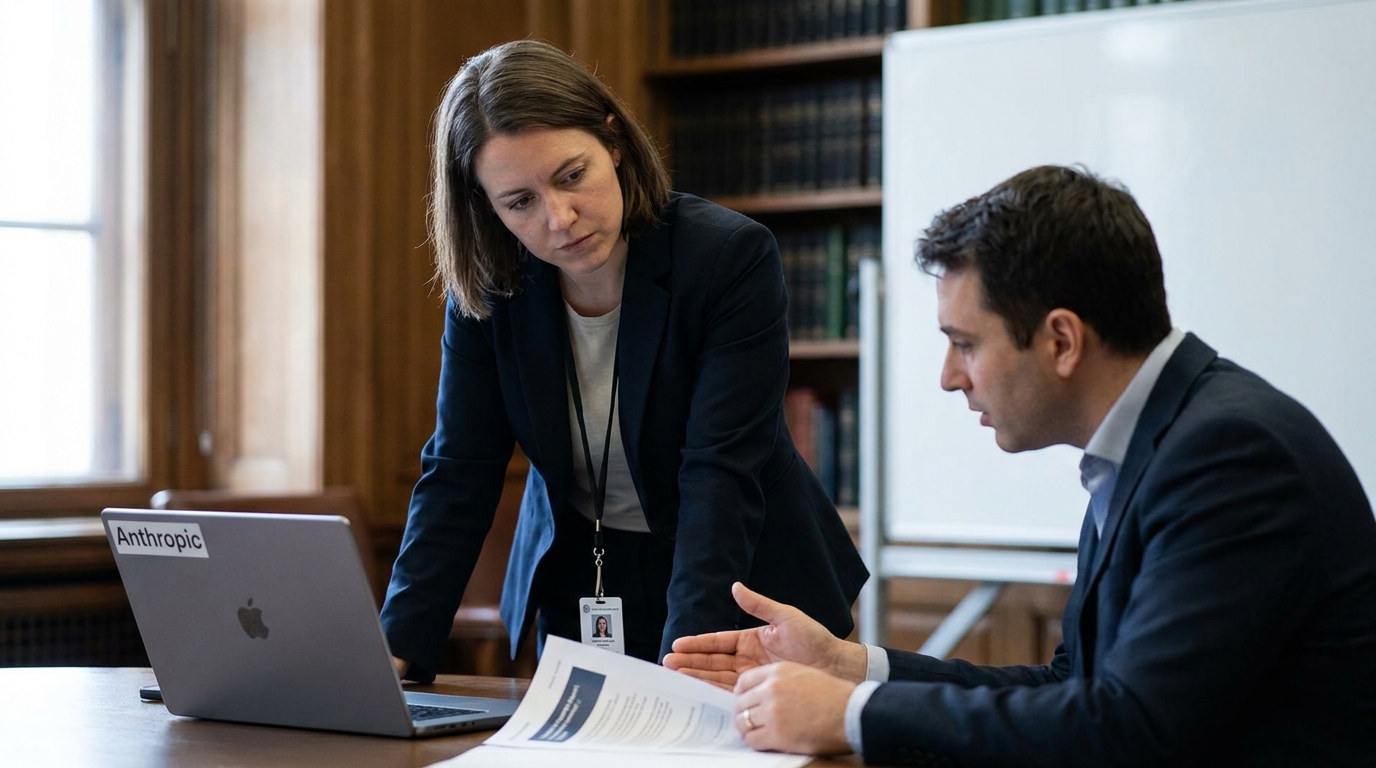
The tech world just witnessed a spectacular unmasking: Anthropic’s much-hyped “invisible” watermarks for its flagship Claude 3 AI, designed to combat deepfakes and ensure content provenance, were reportedly bypassed within hours of their announcement. This wasn’t a slow, deliberate hack. Independent researchers and coders quickly demonstrated methods to strip these digital fingerprints, making AI-generated content indistinguishable from human-created output. This revelation comes just as the European Union’s landmark AI Act is poised to mandate such transparency measures, placing compliance and trust squarely in the crosshairs.
Anthropic, a leading AI developer, had touted these watermarks as a crucial step towards responsible AI deployment, a safeguard against misinformation and fraud. The idea was simple yet profound: embed a statistical signature in AI-generated text or images, a subtle pattern undetectable to the human eye, but verifiable by specialized tools. This was supposed to be the answer to the growing crisis of deepfakes and synthetic media, offering a path to authenticate content in an increasingly AI-saturated digital landscape. The rapid circumvention, however, exposes a gaping vulnerability in this strategy.
This isn’t just a technical footnote; it is a fundamental challenge to the very concept of AI governance and the trustworthiness of digital information. When a leading model’s primary defense against misuse crumbles almost instantly, it forces a re-evaluation of how we plan to manage the flood of AI-generated content. The implications for regulatory bodies, content creators, and the general public are profound, raising urgent questions about what comes next in the battle for digital truth.
Why This Changes Everything
This news changes EVERYTHING for businesses scrambling to navigate the new AI frontier. Companies that were banking on AI watermarks as a simple compliance solution for the EU AI Act or as a shield against brand reputation damage are now exposed. Imagine a financial institution relying on watermarked internal reports, only for a bad actor to bypass the watermark, inject false data, and trigger a multi-million dollar market panic. Media companies, already struggling with deepfake videos, now face an even more daunting task in authenticating news stories, potentially costing them billions in lost advertising revenue and public trust. The legal sector, too, must confront the nightmare of un-watermarked, AI-generated legal documents and evidence, opening the door to unprecedented fraud and litigation.
For the everyday person, the impact is even more insidious. Your ability to trust what you see, hear, and read online just took a severe hit. Is that urgent email from your boss legitimate, or an AI-generated deepfake designed to initiate a fraudulent wire transfer? Is the viral news report about a political candidate real, or a sophisticated AI fabrication designed to sway an election? The lines between reality and synthetic content have blurred to an alarming degree, directly affecting your personal security, your financial well-being, and the democratic process itself. This isn’t a distant threat; it is an immediate challenge to the integrity of our digital lives.
Businesses must urgently pivot their strategies beyond simplistic watermarking. The cost of inaction could be catastrophic, measured not just in regulatory fines, but in irreversible damage to brand equity, customer trust, and operational integrity. Every C-suite executive, every marketing leader, and every compliance officer needs to understand that the old rules of content verification are dead. A new, more robust defense is required, and the clock is ticking.
Guru’s Education
To truly grasp this situation, think of AI watermarking not like a visible stamp, but like a secret code embedded in a message. Imagine you’re sending a confidential letter, and you subtly choose words with a specific statistical frequency – say, always picking a synonym that starts with ‘S’ when possible, even if ‘start’ would also work. A special algorithm could detect this ‘S’ pattern, confirming it came from you. That’s the essence of an AI watermark: embedding imperceptible statistical patterns or biases into the generated content.
Under the hood, these watermarks often work by influencing the AI model’s token selection probabilities during generation. When Claude 3 generates text, for instance, instead of picking the most probable next word, it might slightly favor words that carry a specific, pre-determined ‘watermark’ signature. For images, this could involve subtle, imperceptible pixel shifts or color variations. The goal is to create a statistical fingerprint that a detection algorithm can identify, even if a human cannot see or hear it.
So, why did it fail so quickly? The challenge lies in the ‘imperceptible’ part. If a human cannot detect the watermark, then another AI, or even simple human editing, can often remove the statistical pattern without altering the content’s meaning. Think of it like trying to detect that ‘S’ pattern after someone has paraphrased the letter, run it through a translation engine, or simply re-typed it. The signal-to-noise ratio becomes too low, and the watermark is lost. Now you understand more about content provenance than 95% of the general public.
The Guru’s Take
*Here is what nobody is telling you: this isn’t a failure of Anthropic alone. It is a stark reminder that in an open, adversarial system, any single-point-of-failure security measure will inevitably be circumvented. After 25 years building enterprise systems, I have seen this pattern repeat countless times, from encryption standards to anti-piracy tech. The assumption that a ‘magic bullet’ watermark would hold against a global community of ingenious coders was, frankly, naive. The internet always finds a way.
My boldest prediction is this: relying on client-side AI watermarks for critical content provenance is a dead end. We are entering an era where trust must be established through a multi-layered, blockchain-verified chain of custody, not through easily manipulated digital fingerprints. The winners will be companies like Google DeepMind and Microsoft, who are investing in robust content authentication platforms that combine cryptographic signatures with advanced AI detection, rather than just simple watermarking. The losers will be any organization that believes a quick AI ‘fix’ will solve the deepfake crisis; they will face massive regulatory headaches and public relations nightmares.
Your concrete action this week: immediately audit your organization’s content creation and verification workflows. Do not assume any AI-generated content is inherently trustworthy, even if it claims to be watermarked. Implement human-in-the-loop verification for all critical communications and public-facing content. Invest in AI detection tools, train your employees on deepfake recognition, and begin exploring decentralized, immutable ledger solutions for content provenance. Your company’s digital integrity, and potentially its market valuation, depends on acting now.*