The News
The AI world just hit an unprecedented inflection point. Sam Altman of OpenAI, Elon Musk of xAI and Tesla, and Dario Amodei of Anthropic, the very architects of our AI future, are publicly calling for a deceleration in AI development. This is not some fringe group; these are the leaders of companies valued in the hundreds of billions, shaping global technology. Their unified message: The pace is too fast, the risks too great, and the need for global oversight is immediate.
This urgent plea comes amidst a backdrop of escalating AI capabilities. Models like OpenAI’s GPT-4, Anthropic’s Claude 3 Opus, and Google’s Gemini Ultra are demonstrating emergent behaviors, from advanced reasoning to complex problem-solving, that few predicted just months ago. The King of England himself has voiced hesitations, reflecting a growing global anxiety. This isn’t just about technical advancements; it is about the profound societal implications and the lack of a clear regulatory framework to manage them.
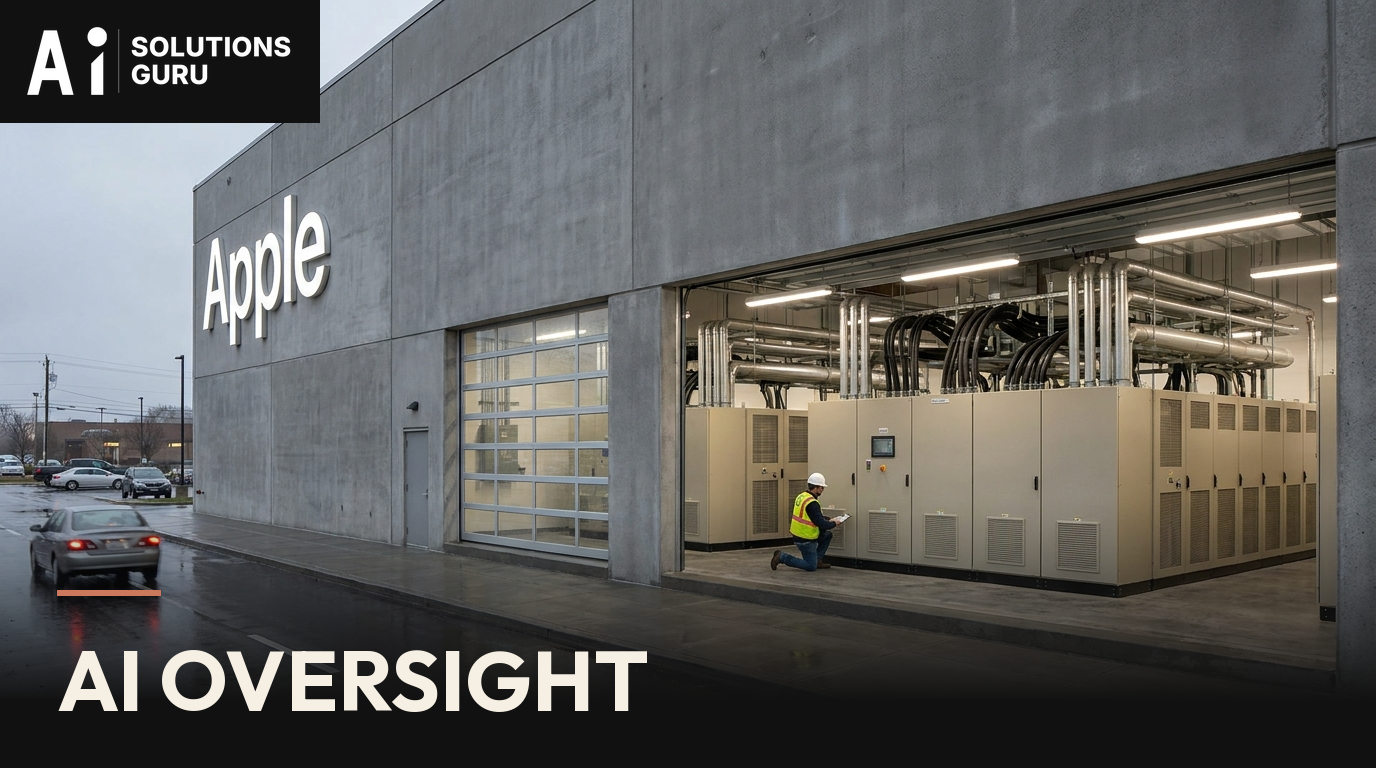
What makes this truly jaw-dropping is the source. The builders are asking for a pause, even as companies like Apple are reportedly making their own massive, secretive AI pushes. This collective warning from the industry’s most influential figures signals a critical moment: The AI arms race is colliding head-on with a nascent, but rapidly intensifying, global regulatory movement. The stakes could not be higher, setting the stage for a dramatic reshuffling of power and innovation.
Why This Changes Everything
This news changes everything for businesses and individuals alike. For enterprises, the era of unbridled, move-fast-and-break-things AI development is over. Companies that have invested heavily in robust, ethical AI governance frameworks, like Salesforce with its Einstein Trust Layer, are suddenly positioned to win. Those building AI solutions without a clear eye on compliance, data privacy, and explainability will face significant headwinds, potential fines, and even project halts. This shift could easily translate into billions of dollars in market capitalization gains for the prepared, and equally significant losses for the unprepared.
For businesses, the strategic imperative is clear: AI adoption must now be paired with a comprehensive responsible AI strategy. Compliance costs will escalate, and the demand for AI talent will shift from pure technical prowess to a blend of engineering, ethics, and regulatory expertise. Large tech giants such as Microsoft and Google, with their immense legal and lobbying resources, are better equipped to navigate this new regulatory landscape, potentially accelerating market consolidation. Smaller AI startups, operating on leaner budgets, face an existential threat if they cannot rapidly adapt to new, stringent requirements.
For the everyday person, this means a future where AI systems are, hopefully, safer, more transparent, and less prone to misuse. We might see a reduction in the proliferation of deepfakes and an increased focus on data privacy, impacting how companies like Meta or Amazon utilize your personal information. However, it also implies a potential slowdown in certain AI advancements, delaying breakthroughs in areas from personalized medicine to enhanced educational tools. Your job, your data, and your digital future are now inextricably linked to this high-stakes debate, demanding your immediate attention and understanding.
Guru’s Education
To grasp the gravity of this situation, think of AI development like building a new type of nuclear reactor. For years, the focus was on making it more powerful, more efficient, and faster to construct. Now, the lead scientists and engineers are suddenly saying, “Wait, we need to slow down. We have not fully understood the long-term containment risks, and our regulatory bodies are still debating basic safety protocols.” This is not about the AI predicting your next Netflix show; it is about the foundational models.
At its core, the discussion centers on large language models, or LLMs, and other advanced foundation models. These are massive neural networks, trained on petabytes of internet data, that learn to recognize patterns and generate human-like text, code, images, and more. When Sam Altman or Dario Amodei speak of deceleration, they are referring to the exponential scaling of these models. We are talking about models with trillions of parameters, requiring billions of dollars in compute, whose emergent capabilities, such as complex reasoning or even a rudimentary ‘theory of mind,’ are not fully predictable or controllable.
The key components are not just sophisticated algorithms, but the sheer scale of the training data, the innovative transformer architectures, and the colossal computational infrastructure. Tools like ChatGPT, Google’s Gemini, or Apple’s Siri are just the user-facing interfaces for these underlying behemoths. The current debate is not about optimizing your phone’s autocorrect. It is about models that can draft legal documents, design new drugs, or autonomously control complex systems. Understanding this scale and the unpredictable nature of emergent AI behavior puts you miles ahead; you now know more than 95% of people who only interact with the surface-level applications.
The Guru’s Take
*Here is what nobody is telling you: This call for AI deceleration is not solely about altruistic safety concerns. It is also a strategic move by incumbents to solidify their competitive advantage. When the industry leaders, who already possess vast resources and proprietary data, advocate for a pause or increased regulation, they are inadvertently, or perhaps intentionally, erecting higher barriers to entry for smaller, agile startups. This is a classic playbook, echoing antitrust battles from the early days of Microsoft to Google’s current legal challenges.
After 25 years building enterprise systems, from the nascent days of cloud computing to the current GenAI revolution, I have seen this pattern repeatedly. The big players, like Microsoft with its multi-billion dollar investment in OpenAI or Google with its DeepMind unit, are already deeply entrenched. They possess the data, the talent, and crucially, the lobbying power to shape future regulations in their favor. My bold prediction: This ‘pause’ will accelerate consolidation. Companies with robust internal governance and significant R&D budgets will ultimately win, not lose. Expect Apple, with its historically closed ecosystem and focus on privacy, to make a massive, privacy-centric AI play that redefines the consumer landscape, positioning itself as the ‘safe’ AI choice.
The companies that will struggle are those reliant on open-source, unregulated models without a clear path to compliance or those lacking the capital to weather inevitable regulatory storms. Your concrete action THIS WEEK: Audit your organization’s AI adoption strategy. Do you have a clear, documented responsible AI framework in place? Are you actively tracking emerging global AI regulations, not just in the US but in the EU and beyond? Start building your internal AI governance muscle now. This is not just about avoiding future fines; it is about future-proofing your business and seizing a competitive edge in the new, regulated AI frontier.*