The News
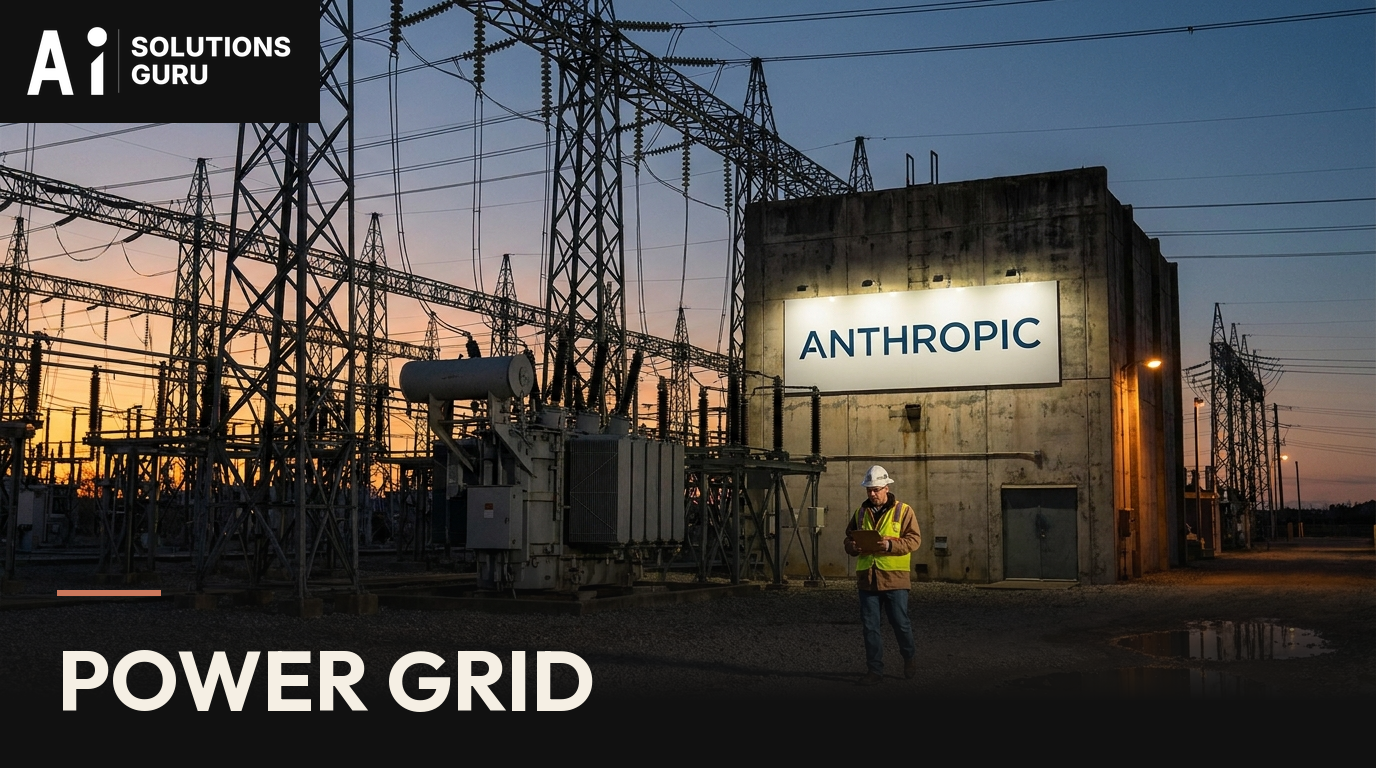
The AI industry just got a massive wake-up call, and it came directly from Anthropic, one of the leading players in the generative AI race. In a recent IPO filing, the company didn’t just mention energy costs as a risk; it flagged gas supply as one of its “biggest near-term risks.” This isn’t abstract; it means the very fuel powering the data centers that train models like Claude 3 Opus is becoming a critical, unstable bottleneck.
This revelation pulls back the curtain on the hidden infrastructure battle underpinning the AI revolution. It’s not just about silicon chips or brilliant algorithms anymore; it’s about the literal power grid. Anthropic specifically warned that the rapid build-out of new data centers, essential for feeding the insatiable compute demands of advanced AI, could drive natural gas prices higher in certain regions. This directly impacts their operational costs, their ability to scale, and ultimately, the future pricing of AI services across the board.
Consider the scale: a single cutting-edge data center can consume as much electricity as a small city. When companies like Anthropic, OpenAI, Google, and Meta are all racing to build dozens of these facilities globally, the demand for stable, affordable energy becomes astronomical. This isn’t a future problem; it’s a current challenge that could reshape the competitive landscape, determining who can afford to innovate and who gets left behind.
Why This Changes Everything
This news changes everything for businesses, from startups to Fortune 500 giants, and it will ripple into the daily lives of everyday people. For enterprises looking to deploy sophisticated AI solutions, whether it’s powering customer service chatbots or optimizing supply chains with predictive analytics, the underlying infrastructure costs are about to become a far more volatile factor. Companies heavily reliant on cloud-based AI services, like those leveraging Salesforce’s Einstein AI or Microsoft’s Copilot, will see these escalating energy costs passed down, impacting their IT budgets and potentially slowing their innovation cycles.
Who wins in this new reality? Companies that have invested heavily in energy-efficient AI architectures, or those with diversified energy portfolios, including renewable sources. Hyperscalers like Google and Amazon, with their long-standing commitments to renewable energy and global infrastructure, might find themselves with a strategic advantage. Who loses? Anyone who underestimated the fundamental economic reality of AI: it runs on raw power. This forces CTOs and CIOs to scrutinize not just model performance, but also the energy footprint and long-term cost projections of their AI strategies, impacting everything from vendor selection to internal development.
For the everyday person, this means that the AI-powered services we increasingly rely on, from smart home devices to personalized streaming recommendations, could become more expensive or evolve slower. Imagine your banking app, your navigation system, or even your favorite online game; if the AI powering these services faces higher operational costs, those costs eventually find their way to the consumer. It transforms the AI race from a purely technological contest into a geopolitical and energy-economic one, impacting innovation, affordability, and accessibility for everyone.
Guru’s Education
To grasp why gas supply is critical, think of training a large language model like building a skyscraper. Each floor, each beam, each pane of glass requires immense energy for its production and assembly. The “gas supply” issue is like discovering the concrete factory, the steel mill, and the glass furnace all run on a single, increasingly expensive, and scarce fuel source. You cannot simply wish the skyscraper into existence; you need colossal, consistent, and affordable raw power.
Under the hood, AI models, especially massive LLMs like GPT-4 or Claude, are essentially colossal mathematical machines. They learn by processing unfathomable amounts of data, a process known as “training.” This training involves trillions of calculations performed on specialized hardware units called GPUs, housed in vast data centers. These data centers consume colossal amounts of electricity, which, depending on the region and grid, often comes from natural gas power plants, especially in areas with rapid industrial expansion and less renewable energy integration. It is not just the electricity to power the chips; it is also the immense power needed for cooling the entire facility, preventing these multi-million dollar machines from melting down.
So, the key components are the GPUs doing the calculations, the sophisticated cooling systems preventing overheating, and the massive power grids supplying them with electricity. A single, modern data center can draw enough power to light up a town of 50,000 people. When Anthropic flags gas supply, they are talking about the fundamental fuel powering the grid that keeps their multi-billion dollar compute infrastructure running to deliver the next generation of AI like Claude 3 Opus. Now you know more than 95% of people about why the AI race isn’t just about algorithms; it is about fundamental energy economics.
The Guru’s Take
*Here is what nobody is telling you: This energy crisis will be the ultimate differentiator in the AI race, more than algorithmic breakthroughs alone. After 25 years building enterprise systems, from the early days of Salesforce to hyperscale clouds, I have seen this pattern before. Infrastructure costs always catch up, and they dictate who can scale and who cannot. The AI giants who secure long-term, diversified, and sustainable energy sources will dominate. Those who do not will be forced to raise prices, limit innovation, or simply fall behind.
Companies like Google, with their deep pockets and long-standing investments in energy infrastructure, efficiency, and renewable projects, are inherently better positioned than newer players. Amazon Web Services, with its global footprint and significant renewable energy commitments, also holds a substantial edge. Smaller AI startups, largely reliant on public cloud providers, will inevitably face increasing costs, potentially stifling their ability to innovate and compete. The real losers are those who view AI purely as a software problem, ignoring the hardware and energy realities that underpin its very existence.
Your concrete action this week: If you are a CTO or a business leader, immediately audit your AI strategy for energy dependency. Ask your cloud providers for transparent reporting on the energy footprint and cost projections of your AI workloads. Start exploring more efficient models or even consider hybrid solutions that leverage renewable energy or localized, optimized infrastructure. This is not just about greenwashing; it is about future-proofing your multi-million dollar AI investments against an inevitable reality. The future of AI is not just about intelligence; it is about power.*